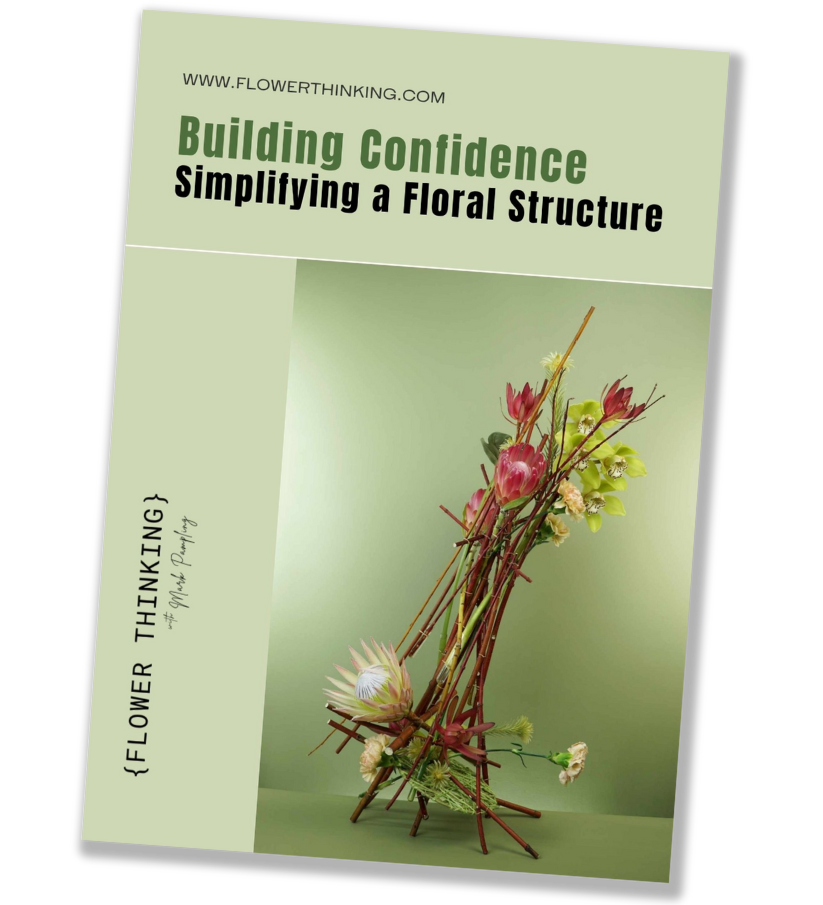

What is formal-linear design?
Formal-linear design - more accurately translated as form-line design - is an arrangement style in which the individual silhouette, line, and expressive character of each material is the primary focus. Rather than combining materials into a unified mass, the formal-linear designer works with each material individually, assigning it a specific location, height, and position based on its ideal capability in relation to the others. Materials are used sparingly: if too many line-direction materials are applied, individual lines lose their importance; if too many forms are used, forms lose their distinction. Light materials are placed high, heavy materials low; pointed forms to the outside, round forms to the inside. The varying space between materials creates areas of artistic tension. Gregor Lersch describes it as almost a ballet of floral silhouette - every silhouette its place, every line traversing consciously, every effect of a given silhouette never interrupted but rather emphasised. It is the most technically demanding and theoretically rich of the three design forms. Sources: Lersch (310), Assman (310).
Also