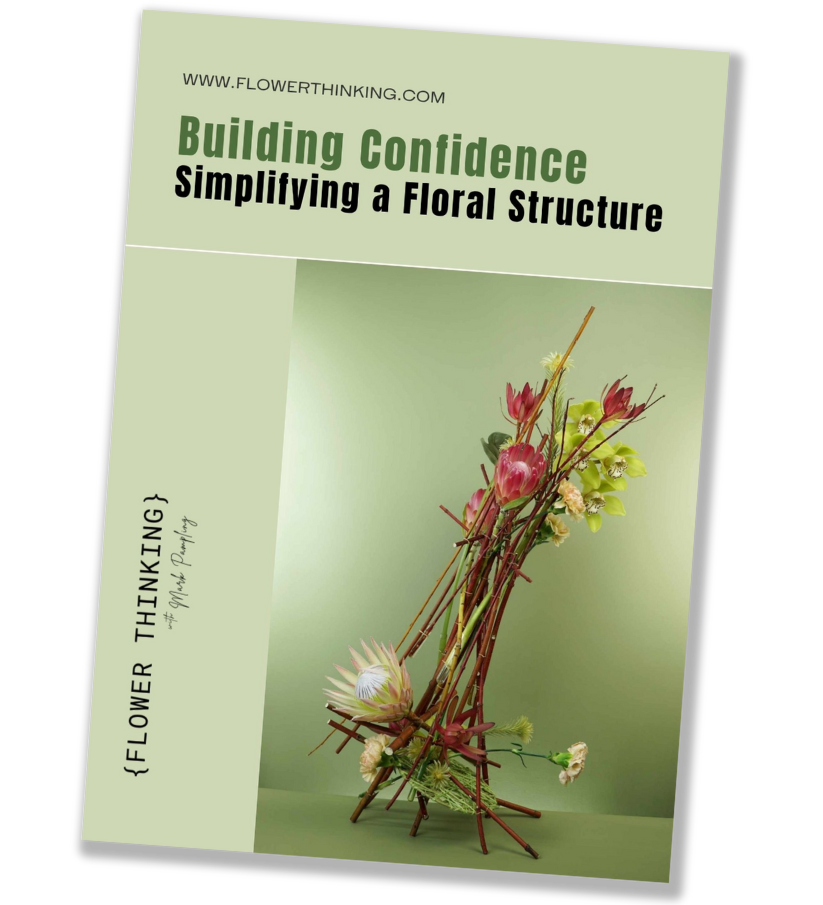

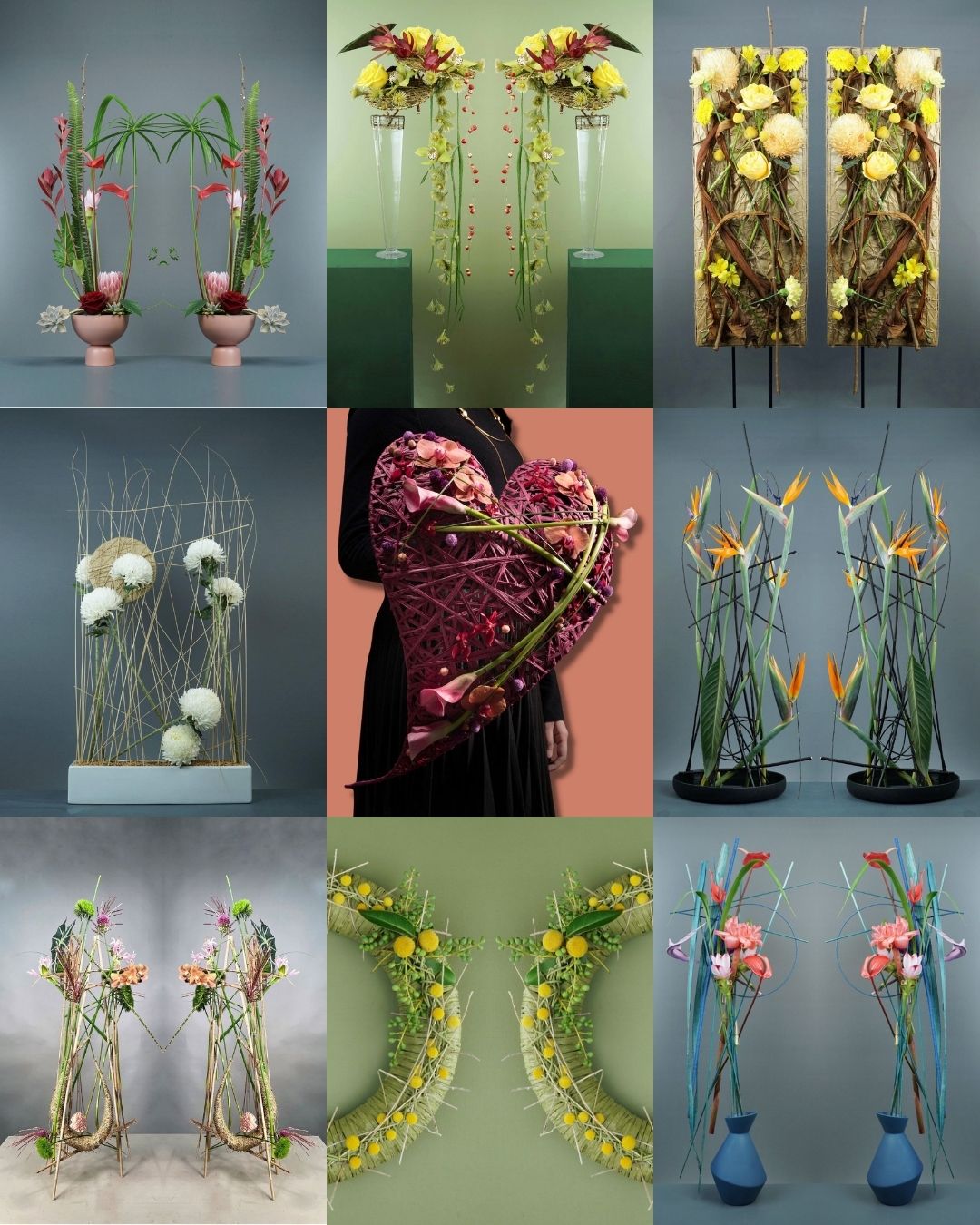

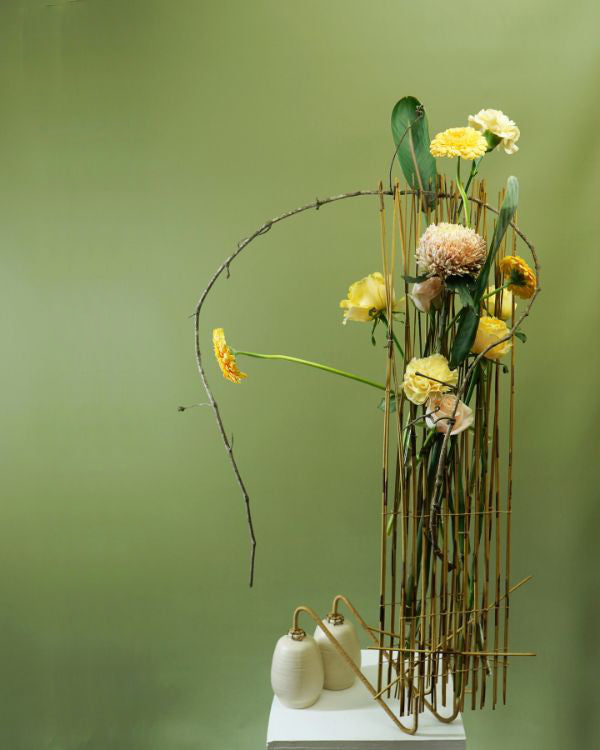
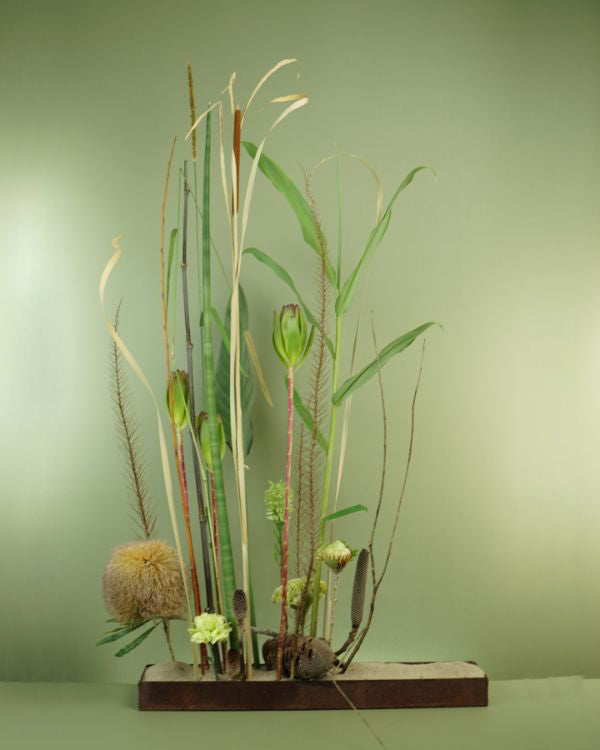
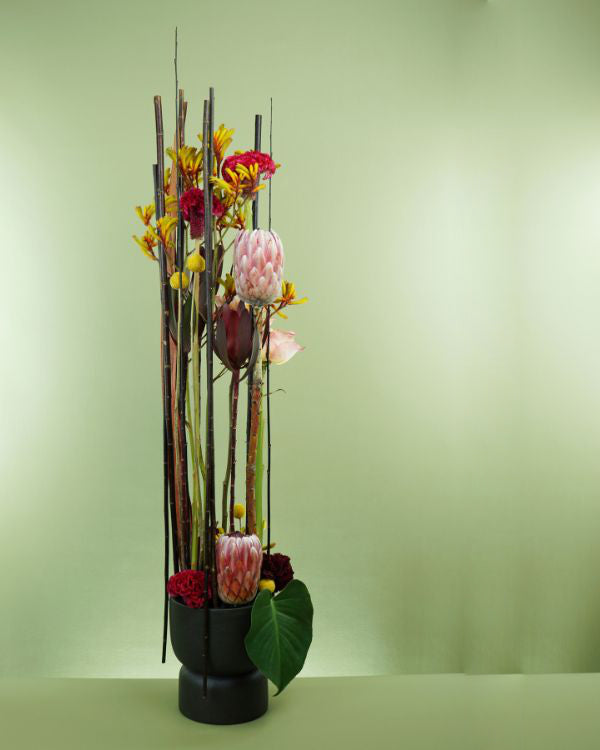

After receiving the Ebooks I found myself feeling inspired and excited to up my floral game. Admittedly I have become rather bored with my current role in the floral design industry. Feeling unchallenged and frustrated. I started following Mark on instagram a few years ago and have been really interested since. Most of the designs seemed too complex or outside my skill level. After reading through the ebooks I have started to understand the mechanics of these designs. Now I can’t stop analyzing them, and have started thinking like an artist again. I love being challenged and learning new skills. Once again I am seeing materials in a whole new light. I live in a floral desert here in my town with very limited options for interesting and even more common botanicals. Creating even more challenges. I am really excited to see where this takes me and plan to participate in more tutorials in the near future.
What a weekend, I started working through the Ebook, following every step carefully. I had to modify measurements because of the card I had and as I wanted to use the Panels to suit the space allocated at the upcoming local Show. The instruction for the panel were excellent. I have decided that the legs would be suitable for the panel to stand on the diagonal to give me more space to create a more unusual effect. It was a brilliant suggestion to use the coloured paper covered wire on the last wrapping of the panel.The
leg instructions for the vertical stand were excellent and easily adapted. The sequence fo adding the wood pieces and flowers were easy to follow. I am now looking forward to using the ideas in this style of arrangement. I am looking forward to the next creation from Mark.
I can't wait to create these designs. I'm certain that once I start, the learning can be extrapolated to other creations. A good basis to try out many ideas. Thanks Mark.
This lesson using bamboo steamer mats gives 2 creative ideas using kitchen equipment. The list of materials required is comprehensive, yet it is easy to see where individuals can use substitutes according to their geographical area.
Instructions throughout are clear, detailed, but at the same time concise, making them easy to follow. The photography showing placements were excellent, although I would have liked one showing more of the original drilling for the first design. The photo for the second design was more helpful to me.
In the notes to the first design, Mark says "the greater the number of binds, the greater the structural integrity of the foundation" is worth highlighting. Not having enough binds is a fault many beginners would have.
The notes for the second design give excellent information on binding the top dowels into some triangles and reasons why this is done, especially the highlighted photo of the main structural triangle.
This ebook lesson is well worth having.
In both designs, the photos of side angles are very helpful
It is a great learning and thank you for sharing your knowledge
I appreciated the clear list of requirements. Then the step by step description of how to get started, gave me the desire to do just that. It also gave me confidence to adapt a flattish bowl container I have. Mark gave clear, concise, but detailed directions of every step with effective pictures to keep me confident of the procedures. The 2nd design gave me enough repetition but with variation to create a second leaning design. I immediately thought of other containers and materials I have in my stash of stuff which could be used effectively and creatively. This is a well constructed e-book which can be easily followed by a beginner or someone more advanced in Contempory work.
Excellent book. Important knowledge explained perfectly. Exactly what I needed.
Designing to Win Uncommon Threads. The course provided the unusual opportunity to respond to a competition brief not once but twice. Using Mark’s detailed ebook as a guide to interpreting a marking scheme and competition brief. All participants produced a design. In a group forum we all received Mark’s insights and expert analysis, including advice on improvements and modifications. Producing a second design with this feedback. Mark held a second forum discussing the second design interpretation from the feedback given. Such a study in floral design and self improvement. Flower Thinking and Mark provide designers to tools to make considered choices in floral designing. I look forward to the next course and learning journey.
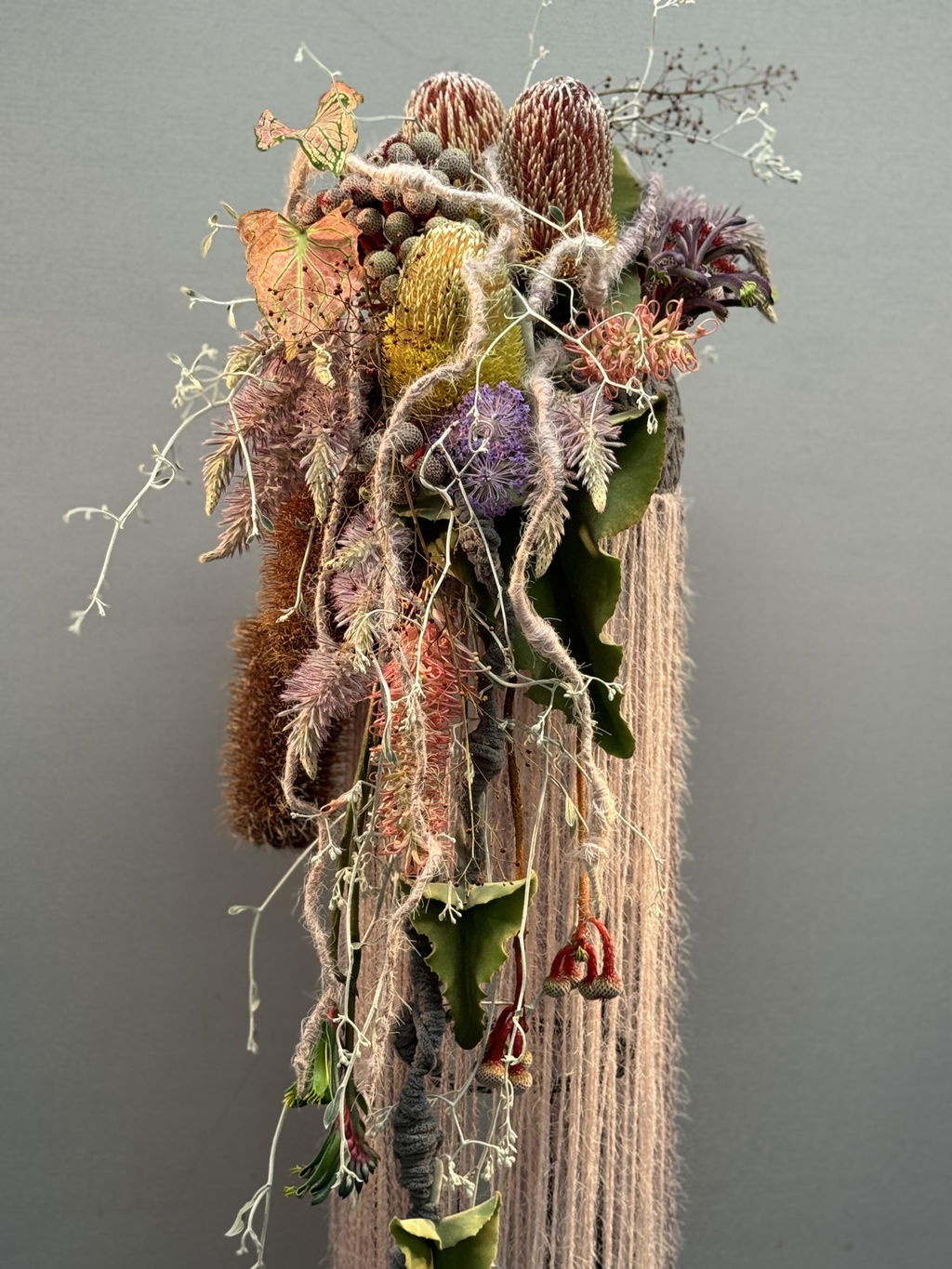
I enjoyed the critiqued detail of the 1st design presented by participants in the theme Uncommon Threads. 2nd design was changed to improve its presentation to fill the brief of an opening Event for a fashion boutique.
The intriguing theme,"Uncommon threads", captured my attention and thinking. I initially thought this short course,"Designing to win", would be too challenging. I found that it was actually comprehensive, well organized and structured, and rewarding eventually. This course was about understanding the rules and schedule of a competition. It was about learning how to evaluate one's design for a competition against an essential list of marking criteria for judging. Mark conducted two virtual discussion forums fluently, meticulously and constructively by giving clear analysis with concise explanations. He posed questions and made suggestions on each participant's design in #1 submission. The task of improving/adjusting/changing in order to achieve a better outcome became the necessary challenge for #2 submission.
The learnings from all the other submissions was just as important as those of mine. After having completed this course, I gained a better understanding of the entire process of designing to win and the crucial decision making that hinged on the points/marks for judging. The "wow factor" which can contribute to winning can be achieved by more critical evaluation of a design. Learning to be a better designer is always my aim in participating in Mark's courses. I truly felt that I achieved it and it was a likely "win" for me. The instructional eBooks and video tutorials on competitions were valuable bonuses given after completion of the course.
Thank you, Mark, for this great opportunity to learn from you.
Excellent course, I learnt a lot just need to put it into practice now.😊
I thought it was a great course! I learnt a lot from the in depth evaluations of each design, and I think the true value of the course can be seen in the huge improvements of all the submitted designs. Thank you Mark.
One Container, Five Elements expanded my design processes and choices. Analysing the container and looking for a link to each of the five elements. Focusing on one element was a disciplined journey, one that became more complex the further I travelled along the path, albeit a rewarding journey. On reflection it allowed me to consider my choices and to give each element of design a voice in my arrangements. I likened it to a choir where one voice may lead but if the supporting harmonies are not in pitch the whole auditory experience is not quite right. I found myself falling to my favourite elements and constantly self-evaluating to see what was often needed, often editing rather than adding. During the group feedback sessions, I gained new eyes not only on my own work but that of my peers. Such a rewarding experience.
I am thrilled to have found Designing to Win classes. Mark is an excellent teacher, looking at the work from both a competitor's and evaluator's point of view. I learned so much watching his thorough critiquing of each design and suggestions on improvements. I would love to try this as a competitor next time. A great educational experience!
Festive Thinking expanded my design process. Mark’s books and video explained the task clearly and with detailed instructions and examples. The feedback session was informative providing suggestions on improvement and self reflection on the design created. Mark’s detailed analysis gives insights into the application of the elements and principles of design. I enjoyed the course and look forward to the next Flower Thinking offering.
This course is totally fabulous, taking one container and working with that in totally different ways with the focus on each of the Elements of design really make you think. Using the container as a starting point for inspiration but then pushing it on alternative ways is most refreshing. Mark's feedback and guidance throughout is so clear and well thought out and is delivered both verbally and in writing. This course is a great opportunity to learn from a master... But it is also self lead in that you choose your own design and work to stretch yourself in what ever way you like. So good I am considering a second round using different container.
That the Festive Thinking courses are extremely worthwhile, cost effective and so convenient to be able to watch the videos at home and then revue at one's leisure.
Festive Thinking provided an opportunity to work to a theme and then see just how totally different everyone's ideas are, when developing that theme. The feedback provided was clear and focused on improvement. It was also great to have certain design styles discussed - in particular the explanation of displacement from container was insightful.
Each task or assignment for this course pushes you to think more about placement of components in order to ensure that the elements and principles of design are used to create a harmonious result. Mark encourages creativity by providing examples before leaving you to work in your own way, this is incredibly stimulating. All feedback provided is done in a positive way which encourages you to assess your own work better each time - however I still manage to repeat some of the same faults over and again ;) so plenty more to learn.
A must if you are looking to improve your designing and challenge yourself to trying out new ideas.
Enjoyed the challenge and learnt so much. Mark's ability to see what might be with a few subtle changes is amazing.