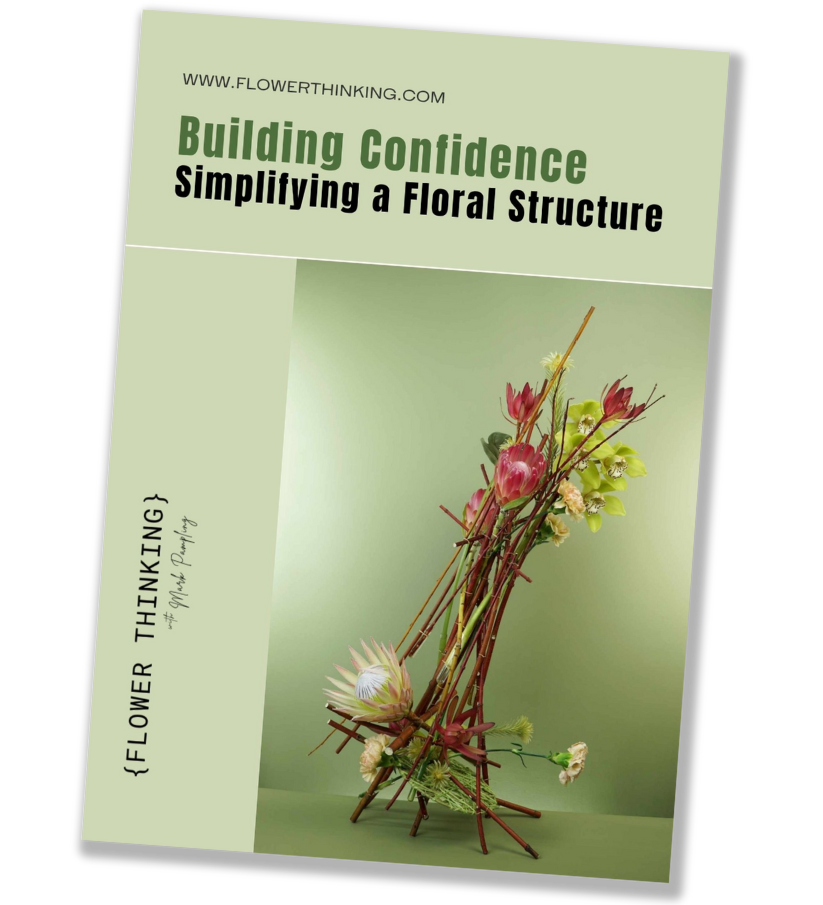

How do you create rhythm in a flower arrangement?
Rhythm in a flower arrangement refers to the controlled visual movement that leads the eye through the design from one point of interest to the next. Good rhythm takes the eye through an arrangement effortlessly; poor rhythm leaves a design looking static and boring. Rhythm is achieved through three principal tools: Repetition, Gradation, and Line Direction. Repetition involves using a form, colour, texture, or line type more than once - but each time modified slightly, because unmodified repetition produces pattern rather than rhythm. Gradation involves using materials that change gradually in sequence - from large to small, dark to light, complex to simple - leading the eye smoothly through the changes. Line direction uses oriented material - a tall stem, a sweeping branch, a cascading trail - to take the eye from one area of the arrangement to another. Rhythm also operates in three dimensions: recessing some flowers leads the eye into the depths of the arrangement. Sources: Pampling (100, 105, 230).
Also