Hello,
March 2026 Flower Thoughts
We are at the end of the March - and what a full, flower month it's been. I hope your month has been filled with floral inspiration and creativity. This month I'm sharing some thinking about texture and repetition, using multiple containers in displacement designs, and inspiration from international floral events I've attended.
|
|
Design of the Month - March
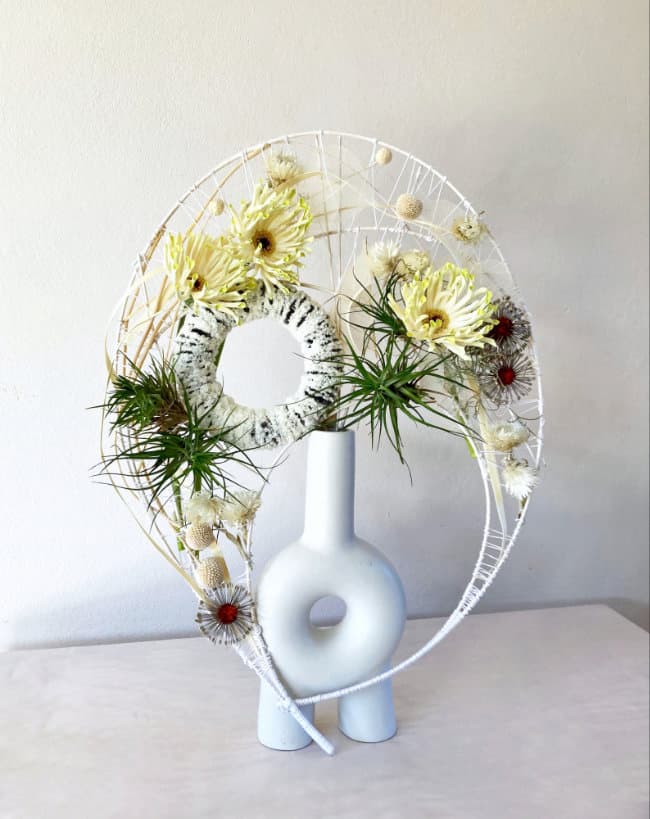
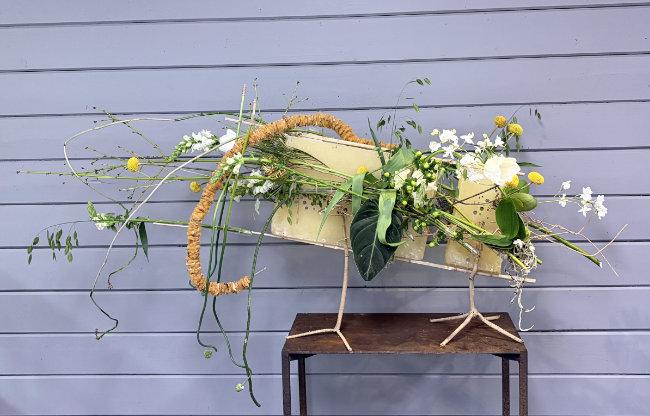
Repeating curves and circles, along with contrasting textures, keep the eye moving around and through our March Design of the Month. Conceived and created by Mary Fairlie-Cuninghame, it’s an interesting study in the skill of drawing the viewer's eye into a composition with a subdued or neutral colour scheme and keeping it entertained and moving. It was designed in response to the texture of the vase, with most material choices offering contrasts that make the viewer more aware of the smooth finish of the vessel.
Mary crafted the arrangement for a submission in our One Container, Five Elements course.
|
|
Texture and repetition in an arching, structural composition.
Take a closer look at Mary's work, and our past Designs of the Month here:
|
|
Working Away from Multiple Containers
Displacement designs are seen more and more frequently. They are a great way to study asymmetry, with their underlying concept of moving the main focal area away from the container or point of origin - or as it’s sometimes described, working away from the container. While the underlying theory is straightforward, understanding it and putting it into practice can sometimes present challenges or new decisions.
"Can a displacement design be made with three containers?"
|
|
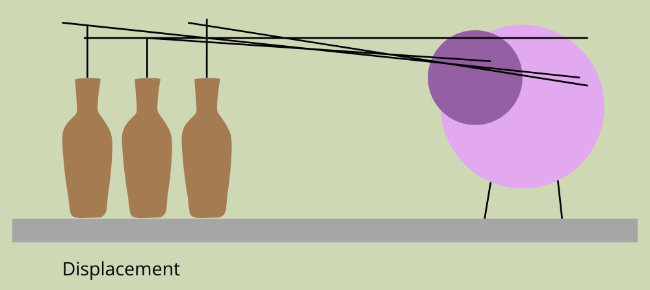
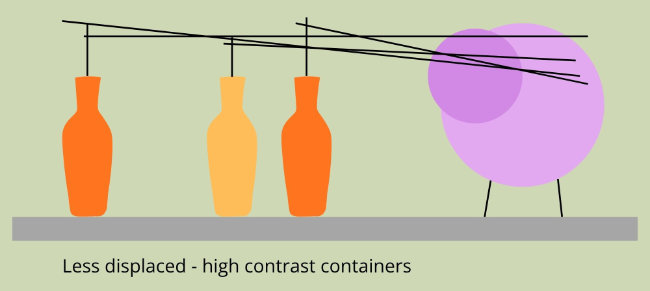
The simple answer is ‘Yes’, however, it can depend on the containers and their visual qualities (colour, form, texture, overall visual interest, etc.) and their placement. The containers need to be subordinate to the main area of interest, as well as being positioned away from it (e.g. to the side), as pictured below.
|
|
If multiple containers are used and they are in high contrast (colour, pattern, form, etc.) there is a risk they will catch the eye first and become a stronger area of interest, detracting from the displacement concept.
If the containers are less grouped and more evenly dispersed through the composition they will be less ‘away’ from the main area of interest, further reducing the idea of a displacement.
|
|
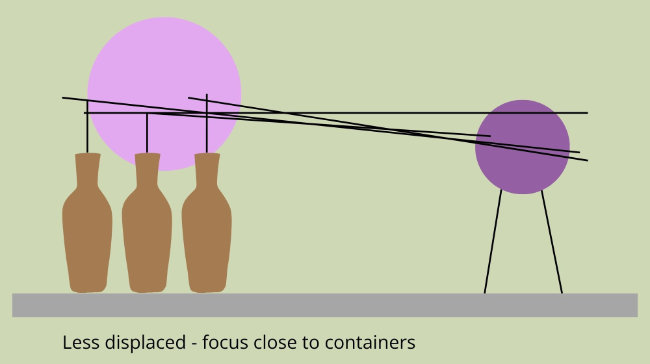
When the strongest area of interest and visual weight is placed close to the container, the feeling of a displacement is lost. When the main focal area and the containers are nearby, any secondary/subordinate areas of interest become ancillary placements, as below. |
|
If you haven’t already, I encourage you to explore displacement. It’s a valuable study of visual balance and distribution that can teach you many things which are applicable to all design styles. |
|
International Floristry Teachers Commune with Gregor
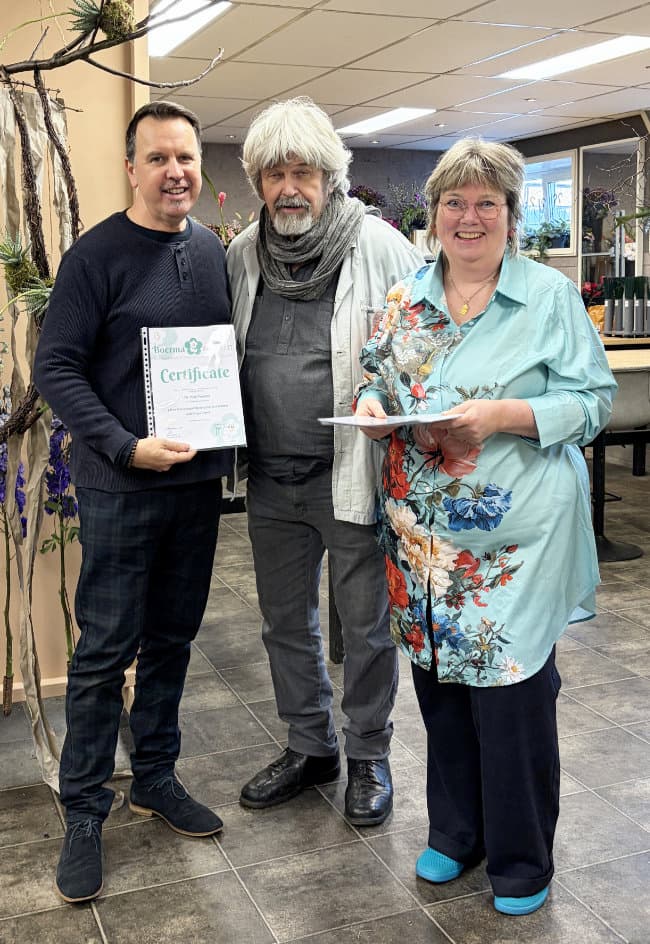
I recently attended the International Floristry Teachers Seminar, facilitated by Gregor Lersch, at The Boerma Instituut in Aalsmeer, The Netherlands. It was my third time attending the event and it was once again full of thought provoking discussions, consideration of current design practices and inspiring design from Gregor and the other teachers.
The three-day program covered hand tied styles using long stems (Flowers in the Air), arrangements incorporating handmade wax shapes, and contemporary wall hanging concepts.
My main takeaway was the confirmation of two principle that I have long held - that teachers are also students and that learning never stops.
|
|
Our complete program for Connections 2026 in August with Gregor Lersch in Sydney has been released. It could be your perfect opportunity to be a student and continue your own learning. Find out more via this link:
|
|
Kaleidoscopic Florals
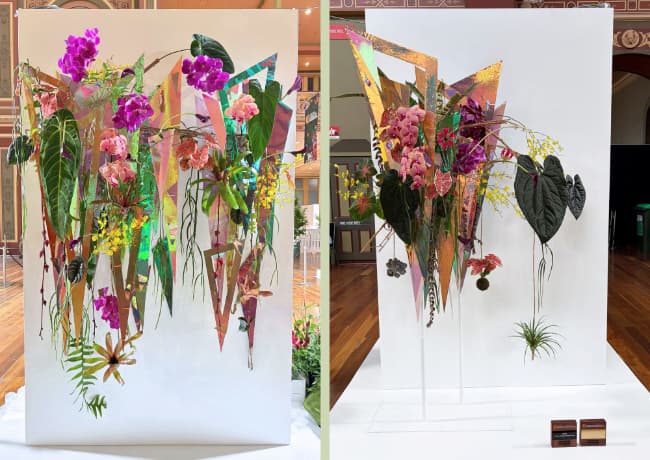
The Melbourne International Flower and Garden Show revamped its flower competitions this year and included a new multi-task, high level floral design category. Here’s the entry created by Sydney Team, D&J Floral Concepts (Duc Thuan Bui and Jeff Smith).
Duc and Jeff won a Gold Medal with their polychromatic entry, and were also awarded the Best in Floral Design medal.
|
|
Vertical Wall Design (left) and 'Kaleidoscope in Motion' structural design (right).
Entries were staged in two parts - a vertical wall hanging created during show set up days, and a complimentary structural design, created live in front of visitors when the show opened. It was a fantastic opportunity to showcase floral craftsmanship and interpretation skills. The theme for the entries, and for every aspect of the overall event, was Kaleidoscope.
I was priveliged to judge categories so I had the unique opportunity to get up close and examine some of the details artistry first hand. We’ll cover some more show highlights in the April's Flower Thoughts.
|
|
Containers, Elements and Directions
Looking for ways to hone your design skills, get inspired and have fun? We have two online programs starting soon that can fulfil those needs.
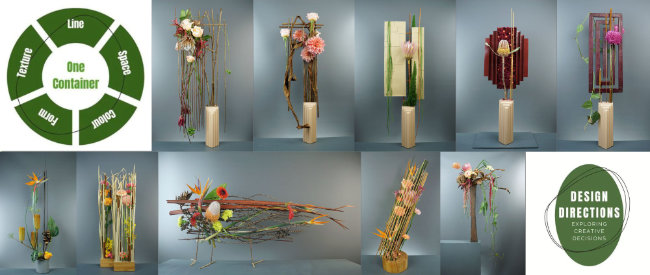
One Container Five Elements challenges you to choose and use one vessel repeatedly, each time focusing on a different element of design.
Design Directions explores the way proportions can be directed to explore the whole suite of design principles, helping to to better understand the decisions you make during your creative process.
Both programs are offered in two time zones - making it more convenient to join no matter where you are located. The live review sessions in each program are recorded, providing even further convenience to engage when you want or when you can.
|
|
Want to know more or sign up to join me? Follow these links for more information:
|
|
Thank you for reading this edition of Flower Thoughts.
|
|
Horizontal design with wax panels presented by Gregor Lersch at the International Floristry Teachers Seminar 2026 in The Netherlands.
|
|
|
|
|