Design of the Month - July
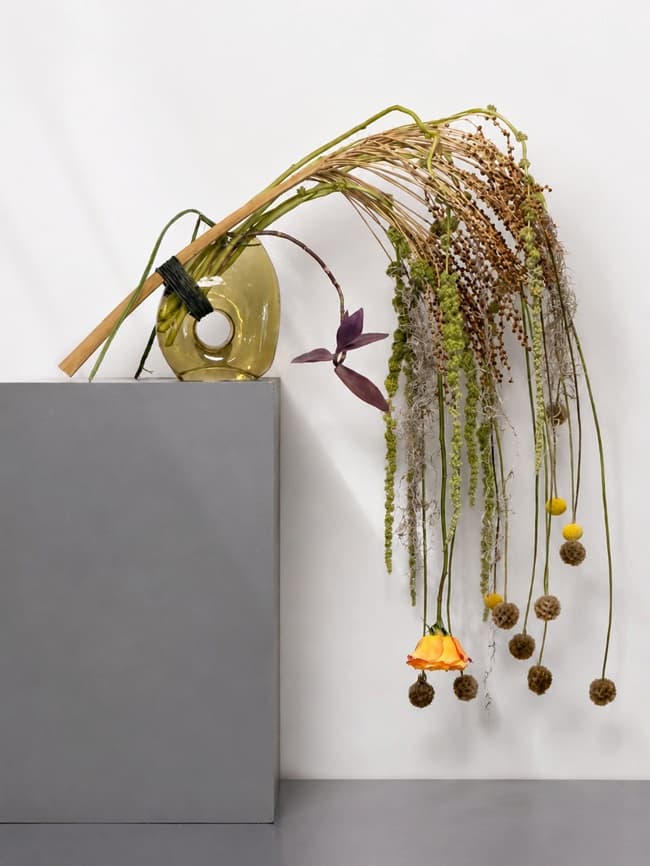
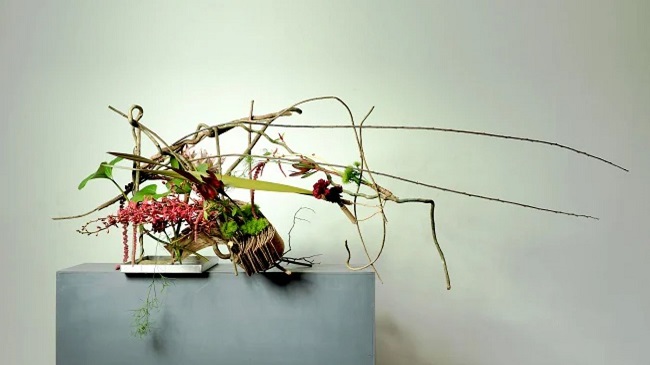
Innovative materials and sustainable mechanics sit at the heart of this fluid, draping composition from the creative hands of Sam Pasteris, made for a task in Design Directions.
Where most arrangements draw the eye in from the top, Sam flips that convention, building focal groupings toward the lower tips and pulling the gaze downward instead.
The container's form and visual weight, the design's intriguing balance, and its rhythmic, flowing lines all work together to keep the eye winding through every dimension of the piece.
|
|
A downward directed design with selected florals suspended from a fresh Palm inflorescence.
|
|
Is it Finished?
A few weeks ago, Kath left a comment on one of my designs asking a question I get often, in different forms - "How do you know when it's done?" I loved the question, because it doesn't have a fixed answer. It depends on the design, the brief, and honestly, on me, on the day.
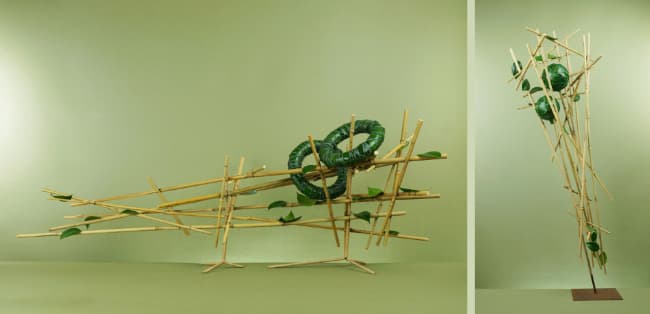
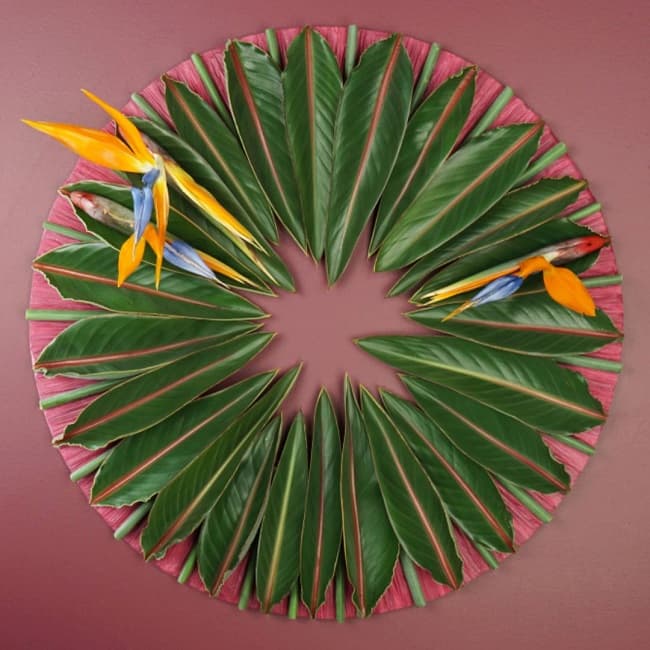
These two designs came out of a Design Solutions brief: an overlapping design using only two materials. I chose Camellia leaves and dried Bamboo. The leaves are either glued individually or wrapped around spherical or ring forms, to create varying areas of interest within the structural lines of the bamboo - a deliberate contrast.
So, are they finished? Before I answer that (I'll share my own verdict next issue), here's how I actually ask the question of my own work.
Three questions do most of the work for me:
Does the eye know where to start? Does it move through the design easily, or does it get stuck? Does it want to keep looking, or is it ready to leave?
If all three feel resolved, the design is probably close to finished, whatever else might be "incomplete" about it.
When one of those three questions snags, this is usually where I go digging:
Is there a material, a line, or a gap doing too much or too little work? Would removing something make the design stronger, or just emptier? Is the imbalance intentional, or did it happen by accident?
A last check, once the design itself feels resolved: does it do what it set out to do? Does it suit its purpose and its audience, and does it still hold your interest after the tenth look, not just the first?
Look at the two photos below. Where does your eye go first? Does it move easily through the design, or get stuck somewhere? Would you call either of them finished?
|
|
I'll share my own answer, and what I'd change if I revisited either piece, in the next issue. In the meantime, please send me your thoughts. |
|
One Day Focusing on the Creative Process
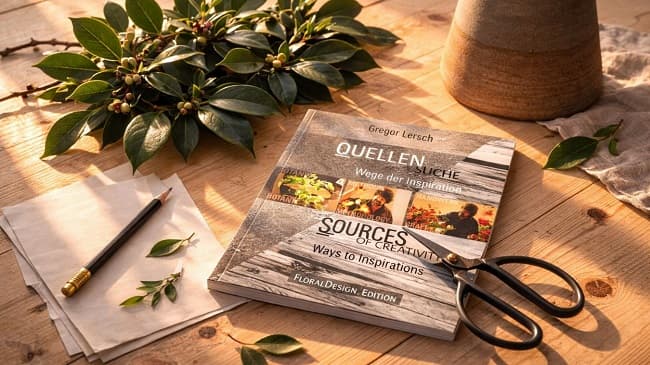
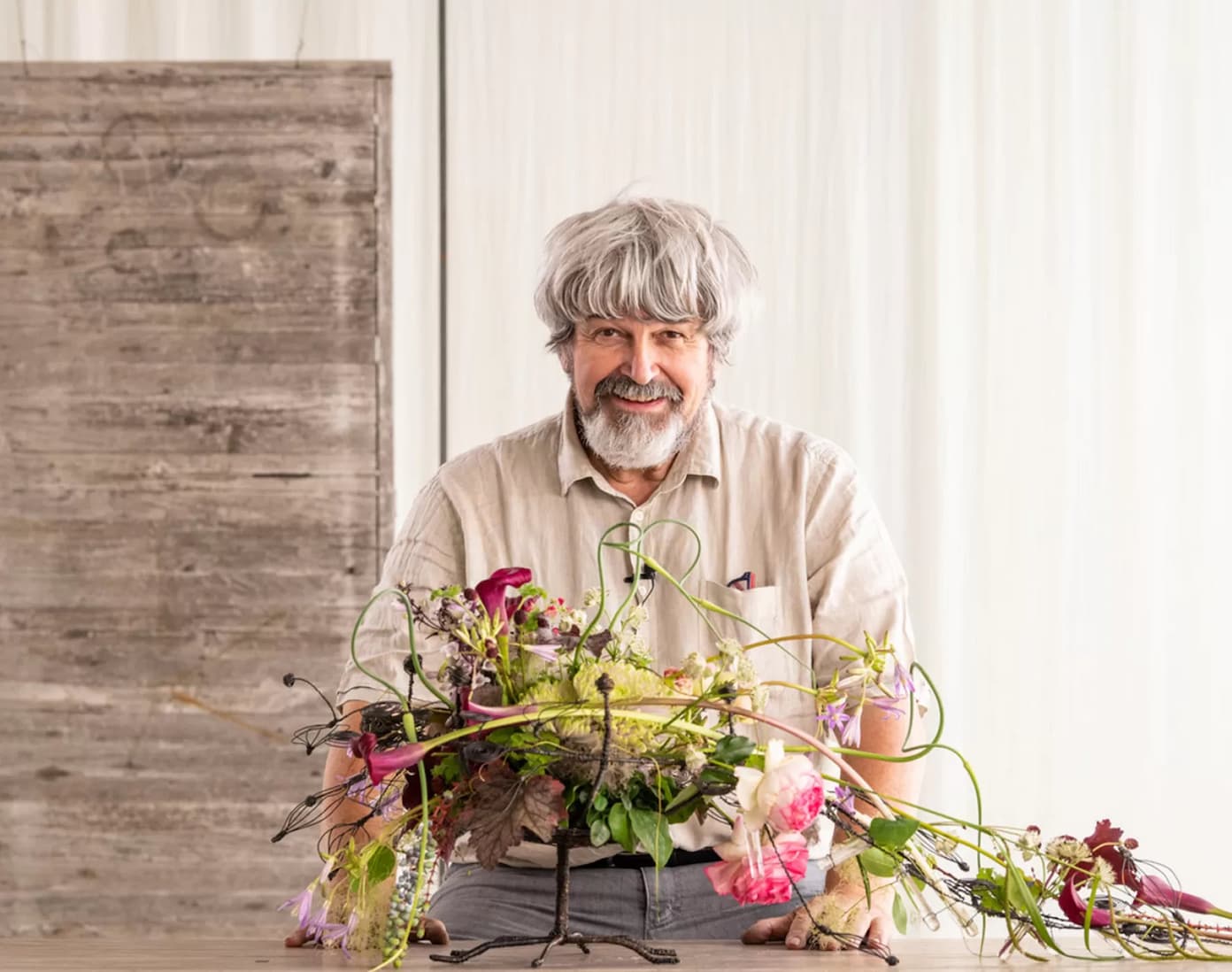
This August I'm hosting a one-day symposium with German Master Florist Gregor Lersch in Sydney, exploring the creative process.
I've long valued Gregor Lersch’s ability to make floral design principles understandable, relevant and practical.
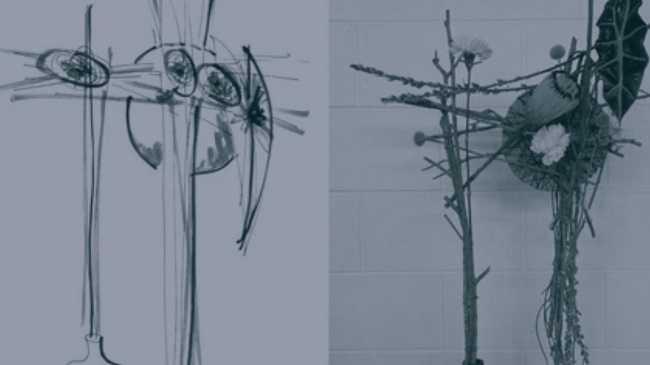
On the day, we'll examine where ideas begin, see designs being developed from unprepared materials and analyse visual balance, ending with an open conversation about creativity in floral art and design.
|
|
For me, the particular value of this day lies in being able to look beyond the completed design and examine the thinking that produced it.
I'd be delighted to welcome you to come and share Gregor Lersch's mastery and passion for design at Sources and Systems in Bankstown this August.
This day will offer:
A deliberate, step-by-step approach to the floral design process Answers to questions about foral art and design using physical examples, on-screen images, and sketches Insights applicable across floral art, flower arranging, floristry and floral design a new perspective on thinking creatively about floral art, from renowned German Master Florist, Gregor Lersch.
|
|
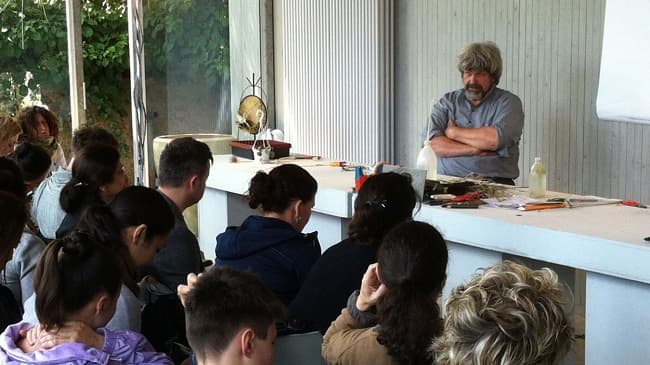
The value of the exercise lies in seeing that process unfold directly. Watching Gregor work at this level reveals the discipline, judgement and decision-making that sit behind sophisticated design work. This isn't a presentation of finished works - rather, it is an examination of how those results come to be. |
|
Sources and Systems is a concentrated day of creative analysis and design thinking. For designers, educators, students and anyone seriously interested in contemporary floral practice, access to that level of experience and reflection is rare.
It's also going to be unique as a day of undiluted and complete focus on the creative process - not just an amazing demonstration of world class design by Gregor Lersch. (Although it will be that, too.)
|
|
Date : Friday, 14 August 2026, 8:30am to 5:00pm Location : Bankstown, Sydney Catering : Morning tea, lunch, and afternoon tea included Amenities : Free onsite parking; located two minutes' walk from Bankstown railway station Accommodation : The Mercure Bankstown is upstairs This is for : Anyone who creates with flowers |
|
If you want to gain greater insight into your own creative process, joine me for Sources and Systems. |
|
Structure Meets Fluidity
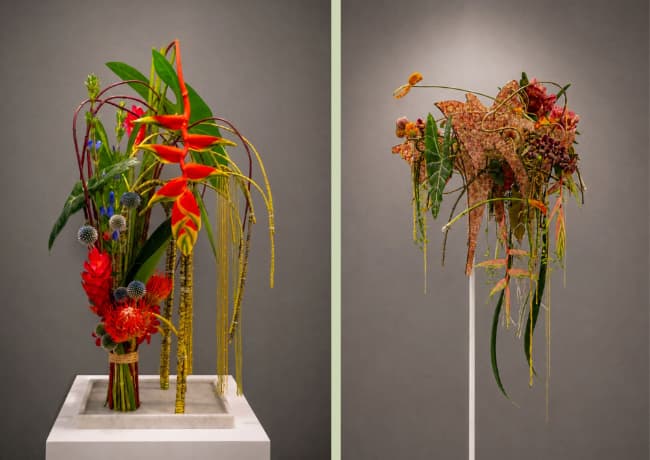
Dynamic, rhythmic lines and fine-tuned visual balance defined Duc Thuan Bui's work in the Professional Category of the 2026 FDSS Cup, held during the Singapore Flower and Garden Festival this month.
For the Free Standing Display task, Lines of Beauty, Duc wove exotic blooms and foliage between sculptural, textured panels, balancing structure against organic movement.
His hand tied bouquet, responding to the theme 'Dynamism in Contrast', struck a careful interplay of structure and fluidity, a tightly bound form set against a looser, more expressive armature.
The craftsmanship and originality across both pieces earned Duc Second Place overall, a well-deserved result for two carefully considered designs.
|
|
Duc’s hand tied bouquet (left) and free standing display (right) created during the Floral Designers Society of Singapore’s 2026 Cup competition
|
|
Thank you for reading this edition of Flower Thoughts. See you for more design inspiration next month. |
|
Mark
PS. Find all the back-issues of Flower Thoughts at flowerthinking.com.
|
|
Do you want to win more prizes in competitions, or just become a better designer through competing?
|
|
Join me for a free 45 minute session with a live Q&A at the end. I'll share what I've learnt from my competition successes and mistakes, and what they've taught me about how to think about design. |
|
|
|
|