Design of the Month - June
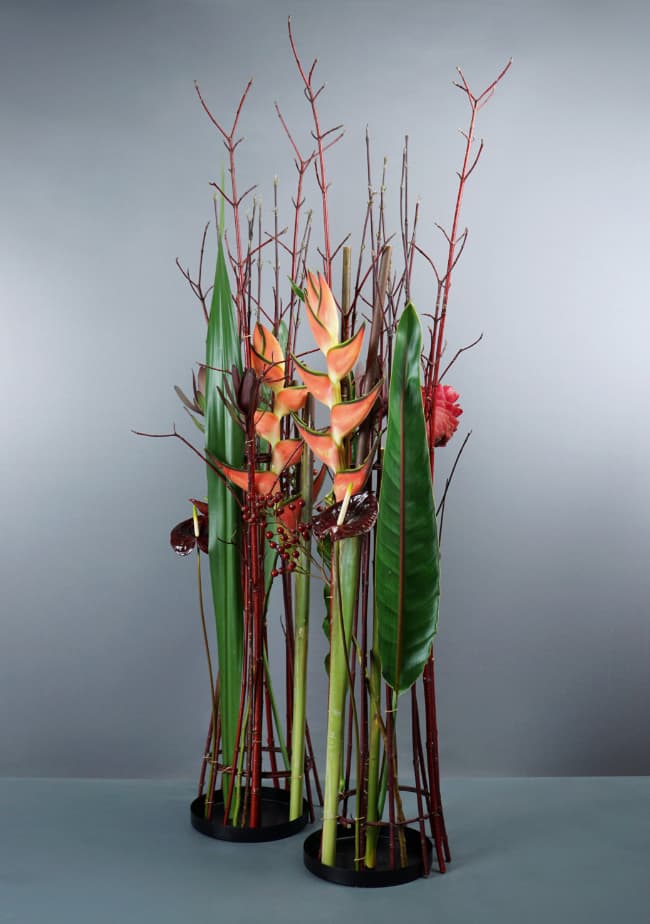
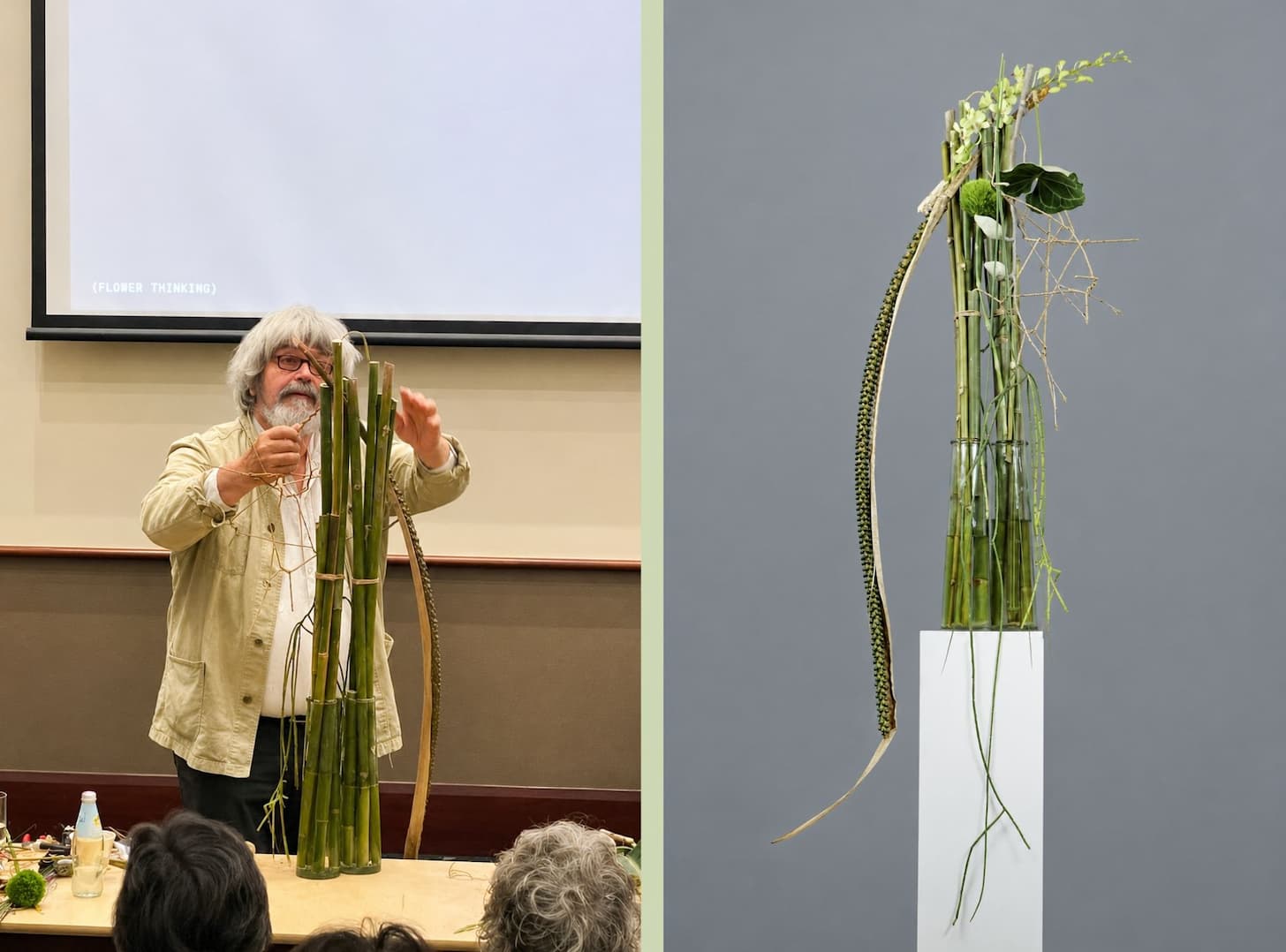
Our June Design of the Month, Twin Tropical Towers, comes from our Floral Numeracy workshop with Bart Hassam in Brisbane last year.
This tropically influenced composition pairs identical shallow dishes and repeating frameworks into twin structures staged as one. Vibrant red Cornus stems are manipulated and bound into tower-like forms, with the other plant materials threaded through or secured to the outside.
|
|
Twin tower designs featuring tropical materials and Red Cornus
Bart's handling of scale makes for strong impact - very large Crabclaw Heliconia and long, flat Strelitzia and Gymea leaves stand harmoniously with other smaller forms, and even tiny rosehip berries.
|
|
Style vs. Organisation
A recurring question that comes to me is, Are all formal-linear designs also radial?
The short answer is “No”.
Formal-linear designs frequently have their materials organised radially as it is a reliable way to ensure space between each element so the individual forms and lines can be clearly seen.
But formal-linear is an arrangement style, and a separate consideration to how materials and lines are organised. A design can be one of three styles - decorative, vegetative or formal-linear. Once the style is decided, you can choose a systematic way of arranging the materials and lines - the choices are radial, parallel, overlapping, winding, or free.
It is possible to align each style (decorative, vegetative, formal-linear) with different organisational systems. So while radial formal-linear designs feel most familiar, it is also possible to have a formal-linear design that is overlapping, or parallel. Possible, but rarely seen. Thinking about the ‘style’ and the ‘organisation’ as separate factors, and considering the various ways they can be combined opens up a world of possibilities.
A winding vegetative design? Send me a picture if you make one of those.
|
|
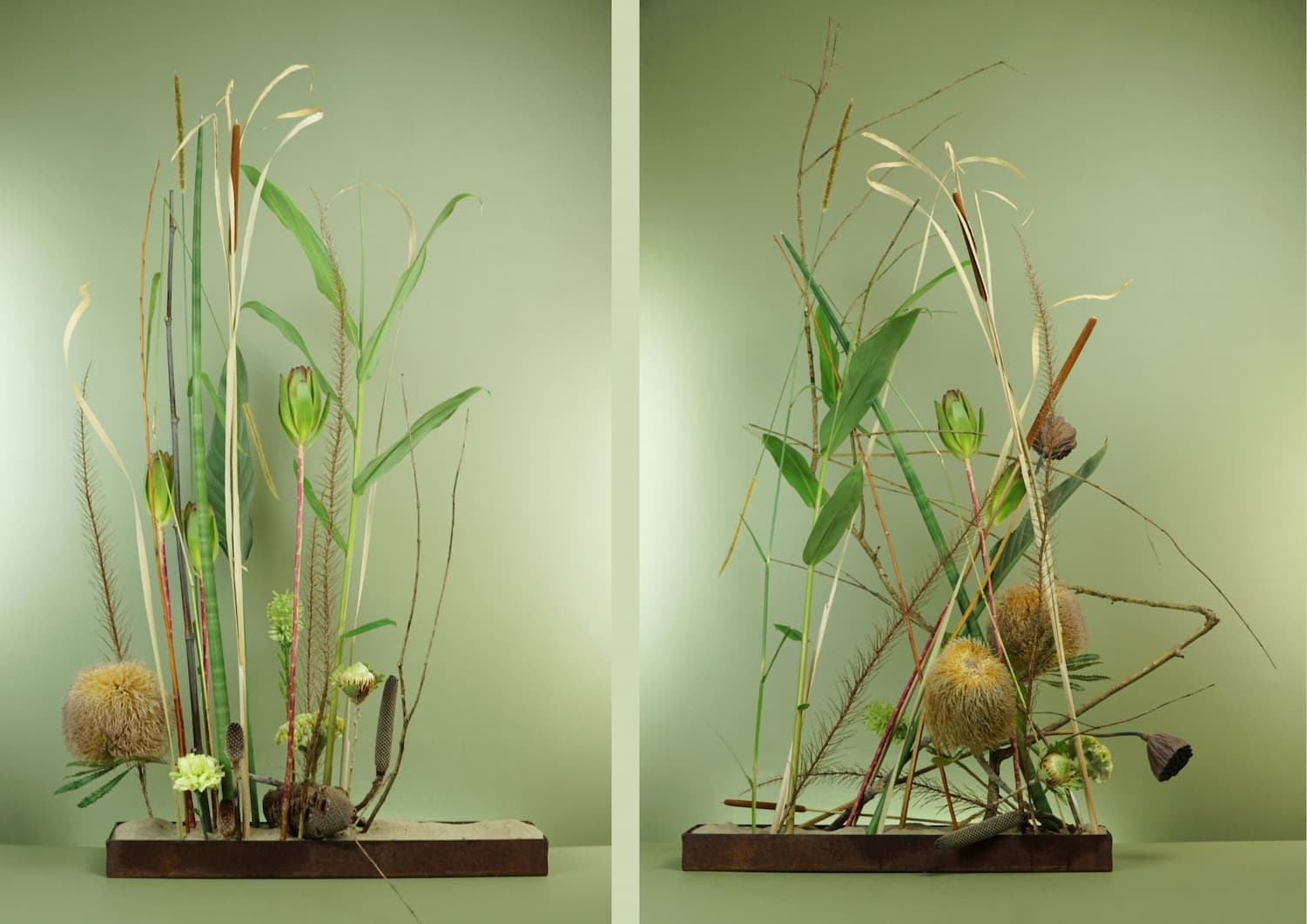
Left: A radial, formal-linear design created for Design Directions; Right: An overlapping, formal-linear design created for Advanced Directions.
I created these two designs (above) using the same materials. Both present the materials in a formal-linear manner - the forms and lines of each material can be clearly seen.
The design on the left has the materials organised in a radial system, with the radial point well below the container. The arrangement on the right presents the materials in a consistent overlapping system.
Same style for each composition, but two different ways of organising the materials.
Thinking in a formal-linear way while consciously overlapping the materials can seem counterintuitive. It is possible, like in the image above, and it’s why I include it as one of the tasks in our Advanced Directions program.
Most of our designing happens in territory we know well. We have modes that work, and we reach for them reliably. But it can sometimes feel like there's something missing - an edge that the competence alone doesn't produce.
I aim to address this by developing the decision-making skills and analytical habits that let us see in our designs the decisions that are working, and the areas where they aren't.
We'll work together through four specific tasks, each requiring a deliberate combination of principles that most of us wouldn't naturally reach for. Over five sessions, we build a more reliable command of those decisions, and a way of seeing that carries into everything we design.
Advanced Directions starts on 2 September with convenient sessions for US/Canada and Australia/Asia/NZ time zones.
|
|
The Creative Process Unfolding
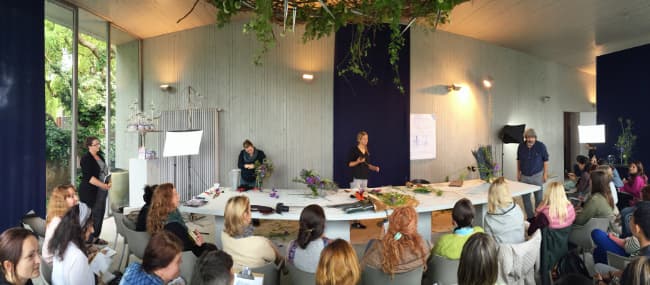
If you've ever watched a gifted designer work and wondered what is actually happening, where the ideas are coming from, how one decision leads to the next, Sources and Systems is the closest thing I know to an answer.
Over the course of one day, Gregor takes you inside the structure of his creative process. He works through his design schema, demonstrates the journey from initial inspiration to a fully resolved design, and analyses visual balance in real time.
|
|
The value of the symposium lies in seeing that process unfold directly. Watching Gregor work at this level reveals the discipline, judgement and decision-making that sit behind sophisticated design work. This isn't a presentation of finished works - rather, it is an examination of how those results come to be.
The symposium is designed as a concentrated day of creative analysis and design thinking. For designers, educators, students and anyone seriously interested in contemporary floral practice, access to that level of experience and reflection is rare.
|
|
Connections ’26 with Gregor Lersch
Sydney: 14–17 August 2026
|
|
Check out the Sydney program here and look at the connections you could make: |
|
What Floral Competition Teaches Us
Competing in floral design calls on several distinct skill sets at once: design skills to conceive work that is pleasing and well-considered, craftsmanship to execute it, and interpretation skills to read the schedule and communicate the theme. Quite often, what determines where an entry places is how well the competitor has balanced these demands, more than their strength in any one area.
The marking criteria can give strong indications of how that balance should be weighted - which disciplines carry the most marks in a given competition. To not study it carefully is an opportunity lost. I find myself coming back to this both as a competitor and as a judge - the entries that place most consistently are the ones that address the schedule fully, including the theme, while also demonstrating sound design thinking and clean execution.
On 21 September I'm running a 45-minute online talk where I'll share what I've learned from both sides of that process. I'll cover how to read a schedule properly, how to approach the marking criteria, and how to make design decisions when the clock is running. I'll also draw on some honest examples from my own competition history, including things that didn't go to plan.
The session is free and offered in London, Sydney and New York time zones, and a recording will be available afterward for everyone who registers.
If you compete, or would like to, or just want to broaden your perspective as a designer, I think you'll find it useful.
Top Tips for Floral Competition Success: Register here - it's free.
|
|
Thank you for reading this edition of Flower Thoughts. See you for more design inspiration next month.
|
|
Mark
PS. Find all the back-issues of Flower Thoughts at flowerthinking.com.
|
|
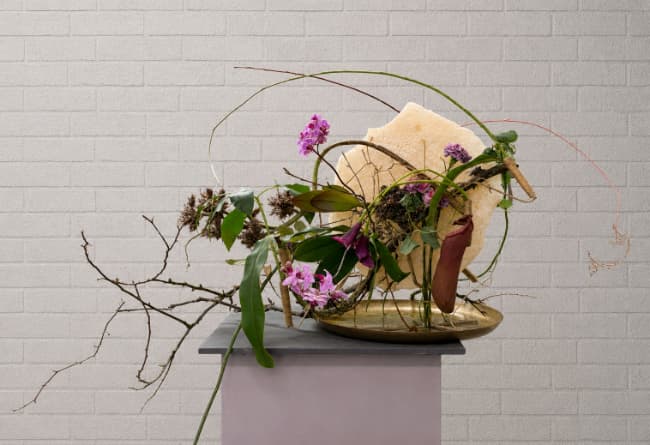
Design incorporating an irregularly shaped wax plate elevated on a wire and branch structure, presented by Gregor Lersch at the International Floristry Teachers Seminar 2026 in The Netherlands
|
|
|
|
|